
User login

2010 programme
Sat 3rd
11:00-11:30
Nucleosynthesis in Supergiant Stars
Dr Peter Norman
Mornington Peninsula Astronomical Society
Supergiant stars, such as the blue supergiant Eta Carinae with a mass equal to 120 suns, release nuclear energy as star light as they progressively fuse hydrogen into helium, carbon, oxygen, neon and silicon. When the silicon core reaches 3500 million degrees Kelvin it collapses in only a few months. It then just takes a couple of days to form an unstable core of nickel and iron, with a mass of nearly 2 suns, before exploding as a supernova. The chemical nuclei are produced in the burning shells and core of each supergiant star. On the basis of detailed research a consistent set of nuclear models of these nuclei is proposed as an extension to those models discussed at previous NACAAs. The models are simple and the author does not know of any other structural nuclear models, unlike the situation in atomic and molecular physics.
| Attachment | Size |
|---|---|
 Nucleosynthesis presentation (200KB ZIP) Nucleosynthesis presentation (200KB ZIP) | 183.86 KB |
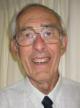
Peter Norman joined the Mornington Peninsula Astronomical Society in Frankston in 1975. Since then he has attended NACAAs in Sydney, Canberra, Adelaide, Geelong, Frankston and Hobart. For many years he taught introductory astronomy to secondary and tertiary students. Nowadays he enjoys leading astronomy classes in local U3As.